


March 11, 2019
Share this postHow to deal with fluctuating water pressure
Inconsistent water pressure is a common problem in commercial properties and the manufacturing industry, where a steady supply of fresh water is often crucial to production. Whether you’re experiencing fluctuations or you have no water pressure at all – we know how much of a drain pressure can have on the day-to-day running of your operation.
So how do you solve the problem? The first step is to identify the root cause…
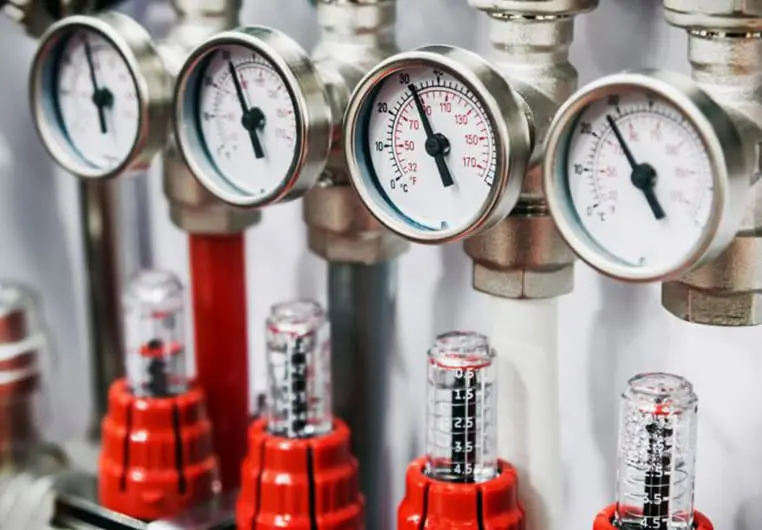
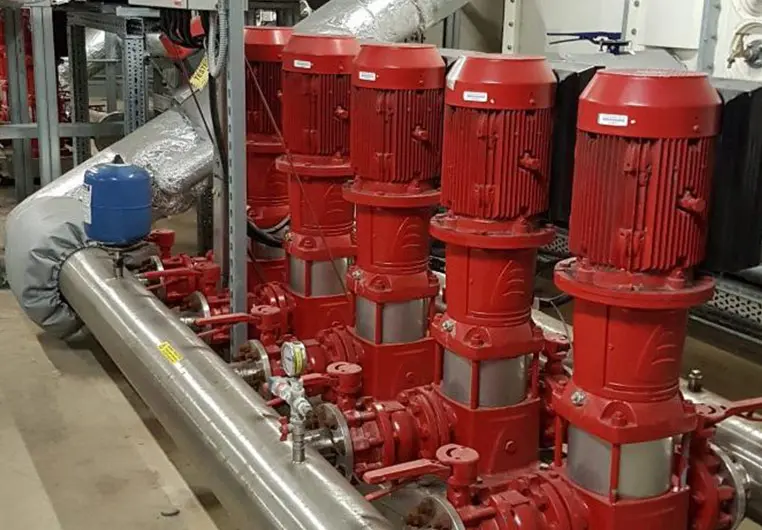
WHAT COULD BE CAUSING A LACK OF WATER PRESSURE?
If there is no water pressure, your pump system and booster set could be experiencing one or more of the following issues:
- The unit is not cutting in. If this is the case then the pump will not be functioning at all.
- Pumps are air locked. The break tank may have been dry, causing the pumps to suck in air and stop, or it could be cavitation.
- A non-return valve failure. This will result in water circulating in the pump rather than flowing off to the system, which is quite common.
- Incorrect pressure settings.
- Failed pressure reducing valve. This can be caused by wear and tear or the filter being locked up.
- Pumps running backwards. Sometimes after electric work has been carried out and power leads are accidently swapped (two phase), this will cause the pump to run backwards.
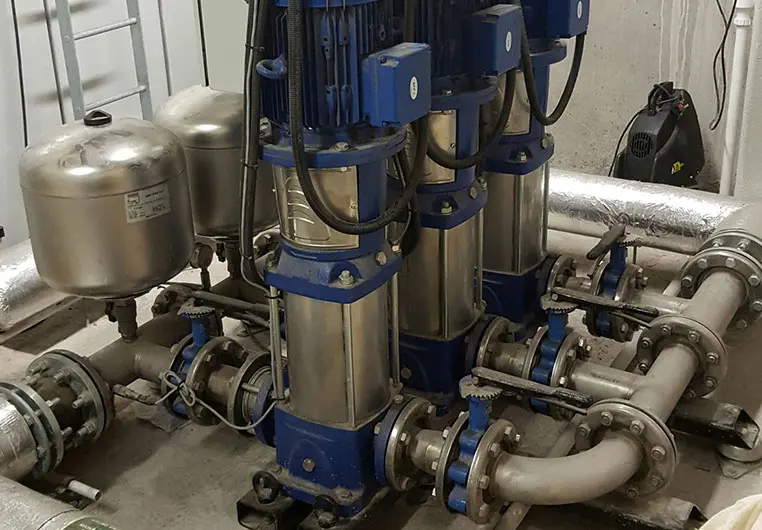
WHAT COULD BE CAUSING INCONSISTENT WATER PRESSURE?
If you’re getting fluctuations in water pressure, the most common causes are:
- Hydraulic accumulator failure
- Pressure-reducing valve failure
- Non-return valve failure
- Loose wiring and faulty sensors
WHAT’S THE SOLUTION?
The best way to establish what is causing your inconsistent water pressure is to have a full service, which will diagnose the system error accurately. Non-return valves, accumulators, pressure switches and sensors can all be susceptible to natural wear and tear as they age, so it may be that your system is no longer able to keep up with demand.
Our first step would be to check to make sure the pumps are running the right way and are correctly ventilated, and then run a full service check to discover and rectify the issue. The solution may involve replacing parts of your system or servicing; at Dura Pump, we will recommend whichever option is going to give you a reliable system long into the future.
CONTROLLING WATER PRESSURE WITH BOOSTER SETS
It may be that your booster set needs replacing or that you need one installed if you don’t already! A water pressure booster pump, or booster set, is specifically designed to achieve a constant reliable water pressure. We can specify, supply and install your booster set for you – so you can wave goodbye to fluctuations.
If you have a booster set but you are still experiencing issues with water pressure, it may be down to one of the common booster set faults mentioned earlier in the article. If this is the case, then we will assess the issue and either offer servicing or specify a new booster set that’s better suited to your application.
It may be that your booster set is no longer able to keep up with your daily requirements, in which case it’s probably time for an upgrade.
Our team were called out by a pet food manufacturer who was expanding their production line and subsequently needed a supply of fresh cold water in their new factory. Their existing booster set was already struggling with the current load, and they were noticing it peaking and underperforming during day-to-day use. We fitted their existing 3-pump set up with a flow meter to analyse the company’s usage over a week and found that the system was undersized for what they were doing. We proposed upgrading to a quad booster set, which meant they could get on with their expansion without any production pauses!
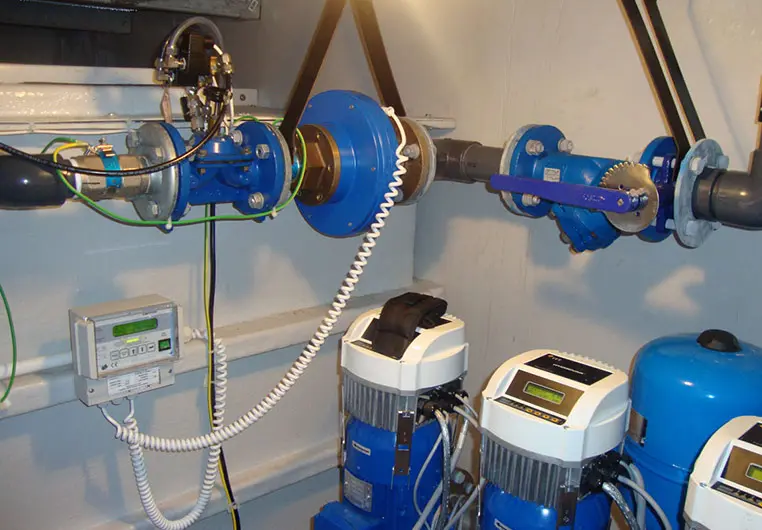
MAINTAINING YOUR PUMP SYSTEM
Regular servicing and maintenance of your pump system and booster set is the key to ensuring there are no issues with water pressure. Proactive maintenance is the best way to avoid future problems, luckily with our Proserv service, you can benefit from 24/7 rapid response and technical support whenever you need it. If you notice some changes in your water pressure then you can simply give our team a call and we can fix the problem before it has the chance to impact your productivity or the experience of your users.
GET IN TOUCH
If you’re experiencing fluctuations in water pressure, we can help get to the root cause and provide a solution! It’s really as simple as that. Get in touch with our team today on 01604 648 800 or email [email protected]
Cavitation occurs when the pressure at a pump’s inlet drops so low that the liquid “boils” and turns into tiny vapor bubbles, even at room temperature. As these bubbles travel through the pump and hit the high-pressure zone near the impeller, they implode, sending powerful shockwaves into the metal. This process creates a distinct noise, often described as “pumping marbles or gravel” and causes physical damage called “pitting,” which eats away at the impeller. In short, it is a condition where pressure changes cause the liquid to physically attack the inside of the pump, leading to vibration, loss of flow and eventual mechanical failure.
A break tank is a water storage tank that sits between a public water main and a building’s pumping system to “break” the direct connection between them.
Ventilating a pump is necessary for both cooling the motor and ensuring liquid flow. Electrically, a pump motor generates intense heat that must be dissipated by airflow to prevent the internal windings from melting or the electronics from failing. Mechanically, “venting” (also known as priming) is the process of removing trapped air from the pump casing; if air remains inside, the pump becomes “air-bound” and cannot move water, which quickly destroys the mechanical seal due to a lack of lubrication and cooling. In specialised systems, ventilation also safely exhausts dangerous gases and prevents corrosive moisture buildup, protecting both the equipment and the surrounding environment.
A flow meter is used with a pump to provide real-time data that ensures the system is operating safely, accurately and efficiently. It acts as a vital protection tool by detecting dangerous conditions like dry running or blockages before they cause mechanical failure, while also allowing for precise process control in applications like chemical dosing or water billing. By monitoring the actual volume of liquid moved rather than just the pump’s speed, a flow meter helps identify internal wear or performance drops early, saving on energy costs and preventing expensive unplanned downtime.
Choosing Dura Pump means investing in reliability and safety for your facility. Talk to an expert about your needs