





Waste Water Systems
Commercial Wastewater Pumping Stations
What are wastewater pumping stations? A commercial wastewater pumping stations system is a chamber, tank, or pit that collects wastewater. It includes a pump system and commercial sewage pumps that transfer the water to a discharge point, main drain, or sewer. A commercial pumping station is fitted with a level control system to monitor and manage the water level.
How do commercial wastewater pumping stations work? Liquid enters the tank through one of the inlet pipes as part of the wider waste water pumping systems on site. As the level rises, a float switch or level sensor activates the pump (or commercial sewage pumps in a duty/assist arrangement), causing it to discharge the liquid. The pump continues until another switch or sensor signals it to stop. This cycle repeats as needed. If the pump fails and the tank continues to fill, a high-level alarm is triggered to alert you.
A commercial pumping station is commonly used for handling wastewater, stormwater, and effluent. They are often known as sumps, sewage pits, wet wells, dry wells, effluent chambers and a foul pumping station. Different types of wastewater pumping stations are available to suit various needs.
Regular servicing and maintenance of waste water pumping stations are essential — and pump station servicing can save thousands of pounds by addressing small issues before they become major problems. A minor fault, if left unresolved, can quickly lead to serious consequences such as flooding or equipment failure. For example, replacing a failed float switch may only cost a few hundred pounds, but ignoring it could result in a pump running dry—potentially causing damage that costs thousands to repair or replace.

Wet Well Pumping Stations
A wet well pump station is a below-ground tank or chamber where commercial sewage pumps (submersible) sit submerged in the liquid to move wastewater to a discharge point. These systems typically include two pumps for backup, though some may have only one. Storm pump stations often use three pumps to handle varying flow levels. A level control system monitors the wastewater, and the pump discharges the liquid through pipework and non-return valves as part of the overall waste water pumping systems. Choosing the right non-return valve is key to reliable sewage pump stations.

Dry Well Pump Station
A dry well pump station is often specified where commercial sewage pumps need easier access for maintenance (for example, in a commercial sewage pump installation). Pipes from the base of the tank connect to the pumps and valve system in this room. Since the pumps are not submerged in liquid, they are easier to access and maintain. Dry wells are often found in older buildings and larger applications.
The underground room housing the pumps and valves is often considered a confined space due to limited access. Dry wells are becoming less common due to the high cost of construction and improved reliability of submersible pumps, which reduces the need for this type of setup.

Above Ground Pumping Stations
Above ground pumping stations, also known as lift stations, are compact, packaged systems used as wastewater pumping stations where traditional pump stations are not practical or cost-effective. These units are designed to be durable and space-efficient, allowing installation in basements, under cabins, or in other tight areas.
Both single and twin pump systems are available, and each includes an integrated level control and control panel. These systems are generally used for lower flow rates, typically up to 38 l/s.


Key pumping station features/what we can offer
- Velocity Sentinam – Zero Blockage – Zero Downtime
- Replacement pumps, level controls, valves, pipework
- Ultrasonic and radar level controls
- Repairs, overhauls and rebuilds
- Pump station servicing, servicing and maintenance
- Remote monitoring and warning systems
- Controls Fault finding.
Applications
- Effluent and sewage
- Waste water process
- Storm/run off water
- Flood protection.
Common issues we can solve
- F.O.G. (fats, oils and grease) and scum build up
- Recurring blockages and call-outs
- Level control issue
- Failed pipes and valves.


Our Manufacturers


Take a look at our pump spares and accessories



Related Case Studies

Dura Pump solution delivers energy savings, zero blockages and zero downtime.
Read more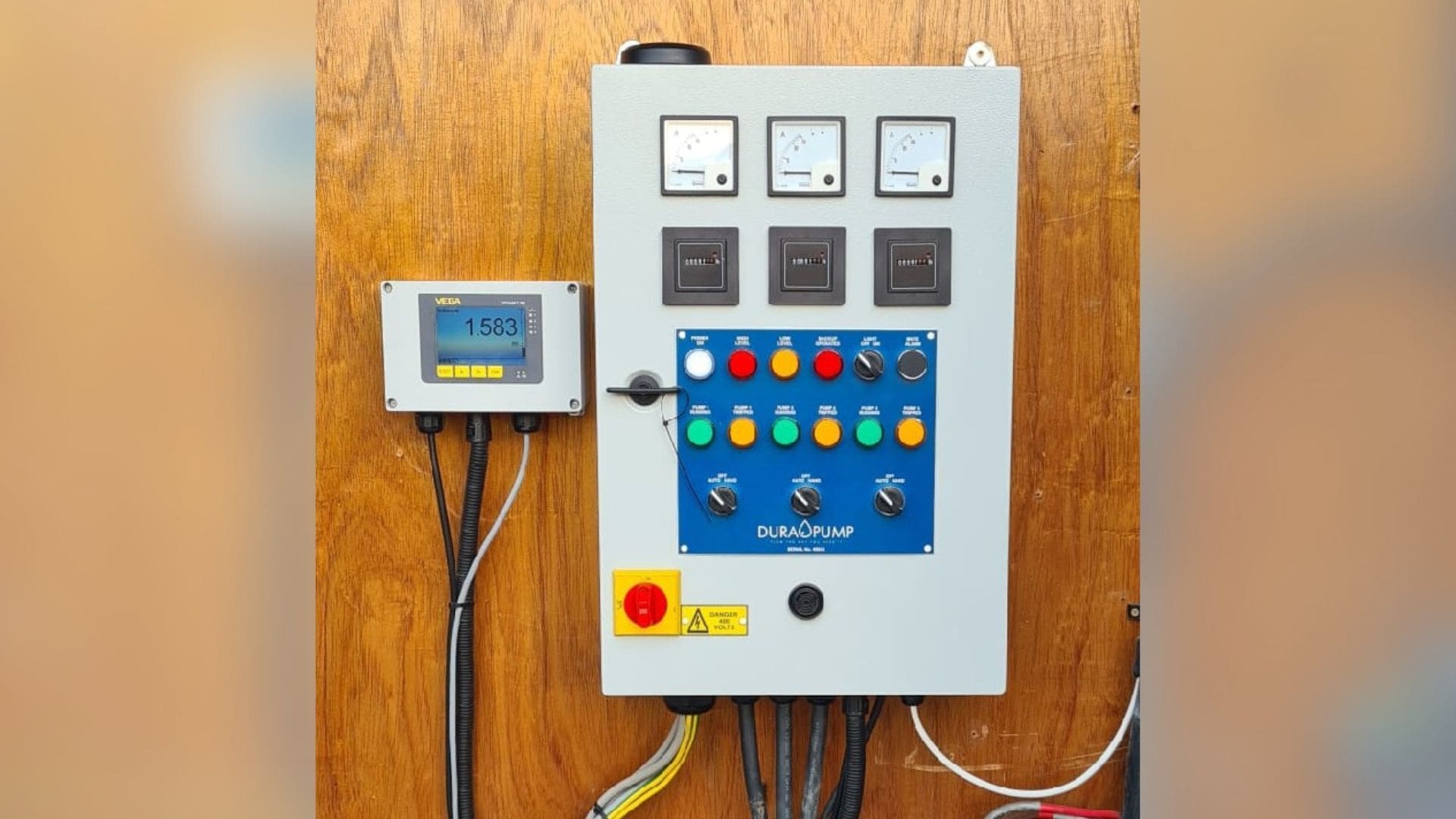
New Control Panel and Level Sensor Upgrade for HMP Belmarsh Sewage Pump Station
Read more
Large holiday and caravan park saves £100k per year by maintenance
Read more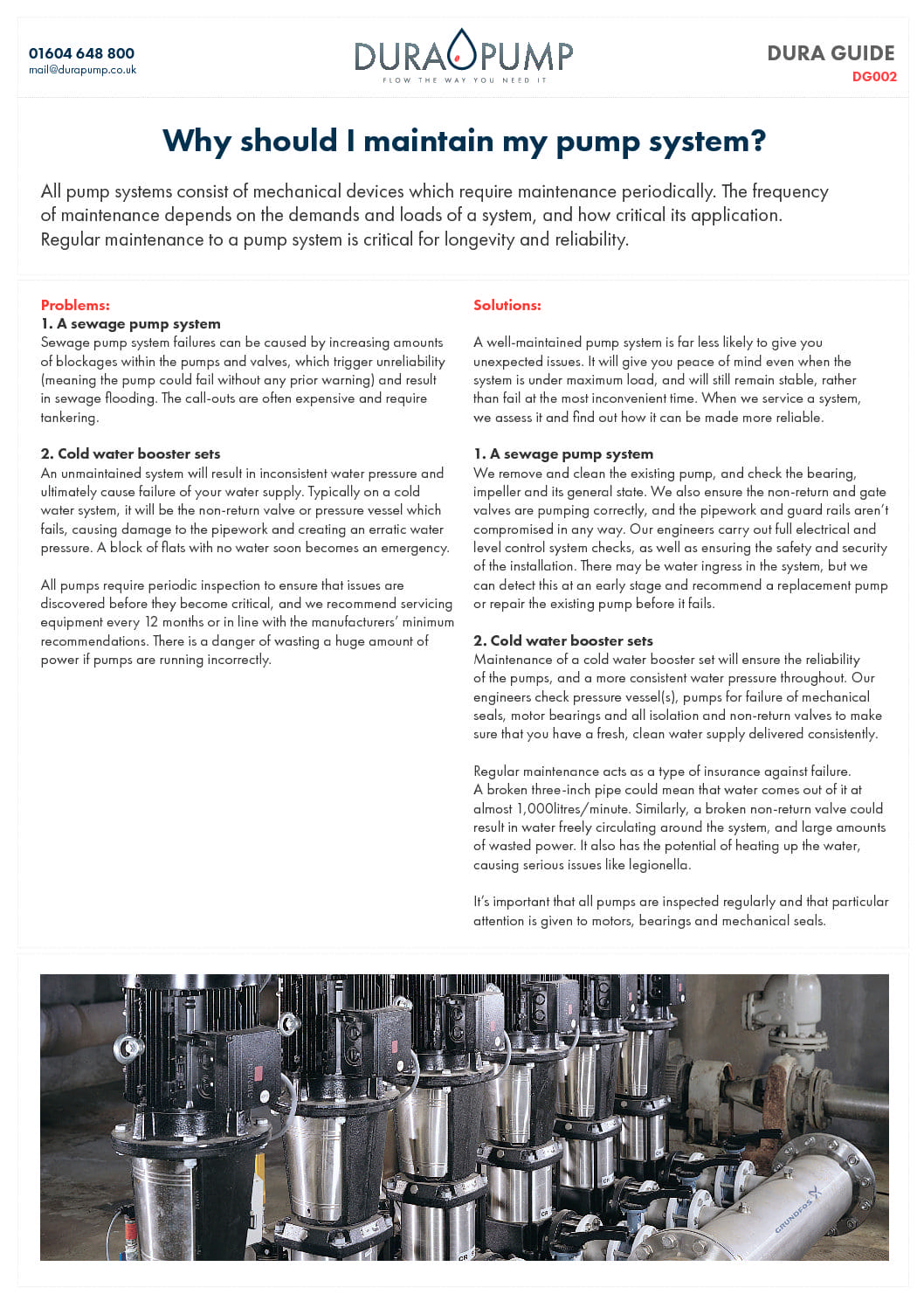
Why Should I Maintain My Pump System?
Download


