


September 14, 2022
Share this post7 Common Booster Set Faults & How to Fix Them
If you own a booster set, it’s critical that you know what common booster pump failure issues to look out for and how they can be fixed. To help our customers in these scenarios, we’ve put together a blog addressing 7 common booster set faults & how to fix them. Check it out!
This guide focuses on the most common causes of booster pump failure, what the symptoms look like, and the first checks you can make before arranging a service visit. Early booster pump failure detection can reduce downtime, prevent secondary damage, and avoid emergency call-out costs.
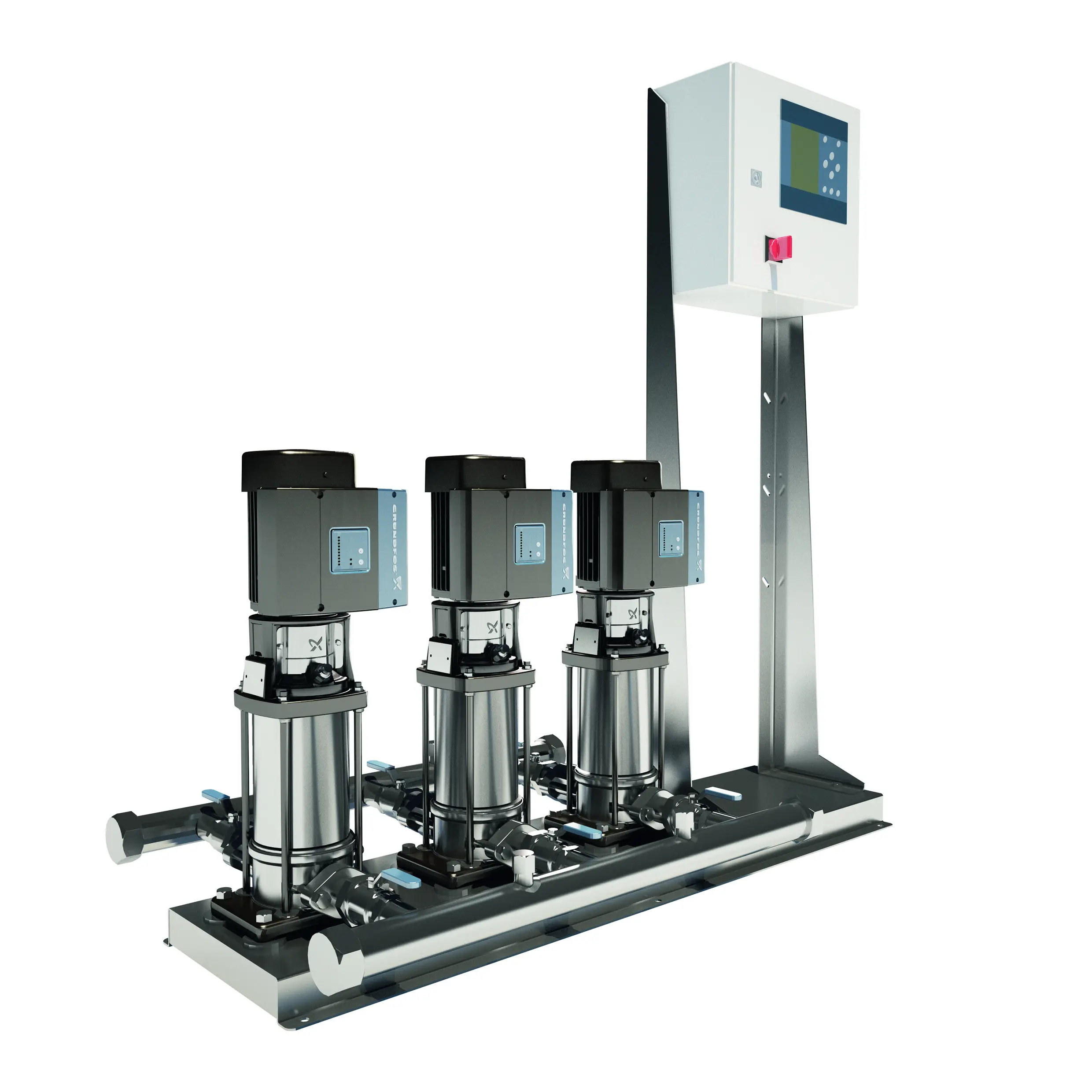

What is a Booster Set & What Does It Do?
A booster set will normally pump cold water. However, they can also be used to pump hot water, softened water, processed water or even grey water in the case of a rainwater harvesting system.
The main purpose of a cold-water booster set is to supply water to a building – most commonly where water storage is required or where mains water pressure is not sufficient to reach the top of the building or to meet the demand. When a booster pump failure occurs, the impact is usually seen immediately as reduced pressure, inconsistent flow, or complete loss of supply at outlets.
For example, in the case of a tower block, the mains will only provide one bar of pressure, which amounts to roughly ten metres of height when pumped. In this case, the booster set is used to provide enough pressure for the liquid to reach all water points. Some buildings require water storage, so that there is enough water to meet demand, and some can store up to a day’s worth of water.
The same type of water storage is also used as a break in a water system, as some processes can cause contamination, so this helps alleviate any risk.
A faulty or obsolete booster set can present significant problems at a heavy remedial cost. To avoid these costs, being able to spot these common issues is essential. For a quick checklist of these issues, keep reading! Many booster pump failure incidents start as small issues (sensor faults, airlocks, valve wear) that worsen over time if they aren’t diagnosed early.
Problem #1: The Pump is Failing to Cut In
A common booster pump failure issue is that the pump provides no water due to not cutting in. If the pump is not cutting in, then the pump will not function at all. Possible causes of this include:
- No mains power
- Water in the break tank
- Pumps have tripped out
- Pumps are air locked
- Pressure sensor failure
- Pressure switch failure
- Inverter failure
- Control panel faults
- Contactor failure, electronic module or timer failure
- Motor failure
- Cavitation pump
How to fix a booster pump failing to cut in:
The solutions to this issue must begin with a full inspection and service visit.
This diagnosis will normally happen within half an hour. After that, a replacement or upgrade can be installed to rectify the problem.
Problem #2: Air Locking & Faulty Valves
Booster sets can face a number of issues around water pressure. These issues can include, but are not limited to:
- Lack of pressure
- Unit not cutting in (as with the previous problem)
- Pumps air locked
- Non-return valve failure
- Incorrect pressure settings
- Failed pressure reducing valve
- Pumps running backwards
The solutions to these issues are often simple. Check to make sure the pumps are running correctly, and then run a full-service check to discover and rectify the issue.
Problem #3: Noises, Vibrations & Bearing Failures
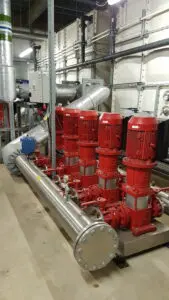
Noises and vibrations from inside your booster set normally suggest issues within. These issues include:
- Bearing failure
- Foreign bodies in the pump
- Non-return valves closing
- Poorly supported and installed pipework
So – how can these issues be resolved? For an older pump, an engineer is needed to replace the bearing. For a new bearing that has not lasted very long, Dura Pump would recommend further investigation to find the cause. In the case of contamination, the foreign body needs to be removed and the tank cleaned. If the contaminant has caused further damage to the pump, this could need further work. Noisy non-return values can be replaced with a quieter type of value, however this is not always possible. All of the above issues are checked in regular maintenance and servicing appointments by Dura Pump.
Problem #4: Issues as a Result of Usage and System Age
The fact is that the older the pump, the more likely you are to encounter issues. These are highly common and include problems such as:
- Leaks
- Wear and tear
- Age
- Contamination
- Solutions
For a torn or worn mechanical seal or a deteriorated O-Ring due to age, the best solution would be to have a service engineer fit a replacement. The pump might also have some corrosion, which can be remedied but it may need a replacement.
The pump would need to be taken back to the workshop for the engineers to look at the problem and find the most economical and cost-effective solution. In the case of contamination, the tank and water source needs to be checked for any contaminants.
If the debris has caused a tear in the seal, causing the leak, this will need to be replaced. Something small in the pump like a piece of grit can scratch the surface of the pump and cause a tear or break in the seal.
Problem #5: Warm Water Coming from Cold Taps
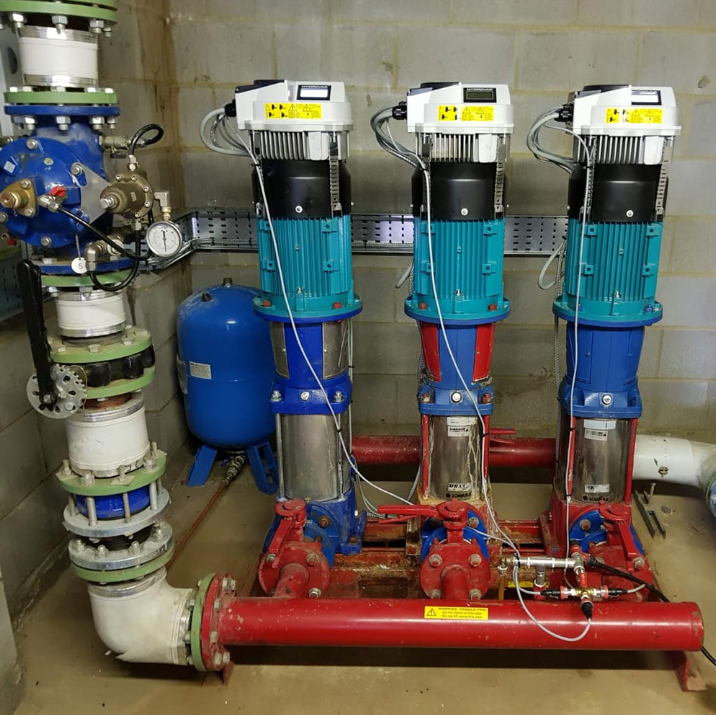
If you’re experiencing warm water coming from cold taps, it is often an indicator of other issues such as:
- Non-return valve failure
- Failure or lack of non-return valve between the hot and cold water system
- Lack of lagging on pipework
- Pumps not cutting out which is a control panel fault
- Hydraulic accumulator failure
In terms of resolving the above issues, a full-service visit will troubleshoot the problem. With a non-return valve failure, there will be a need for further investigation and a replacement or installation carried out. The Dura Pump engineer will check if the correct pipe insulation is in place and update or replace.
Control panel faults, sensor faults and hydraulic accumulator failures will all need full service visits to correctly diagnose the problem and find the solution. Commonly, this will be for the parts to be replaced and regular maintenance carried out.
Problem #6: System Contamination
Contamination represents one of the more serious issues with booster sets, and can severely impact the health and safety of those affected by it. Be sure to keep your eyes peeled for things like:
- Legionnaires / contamination
- The pumps are not stopping
- Poor maintenance or treatment of break tank and the water in it
- Water in the tank might have bacteria in it
- Foreign bodies in the tank
The problem of Legionnaires and contamination in pump systems comes down to the management and cleaning of assets. The main solution is regular maintenance and there are several legal requirements for the maintenance of break tanks. A full service call will discover if the hydraulic accumulator has failed. To correct any possible contamination, the tank and system should be drained, chlorinated and tested by qualified and certified engineers.
Problem #7: Water Pressure Issues
Water pressure issues are highly common in booster sets. Here’s a brief breakdown of the most common giveaways:
- Inconsistent pressure
- Hydraulic accumulator failure
- Pressure-reducing valve failure
- Non-return valve failure
- Loose wiring and faulty sensors
With inconsistent pressure, booster pump troubleshooting would require a full service call which will diagnose the system error properly. The solution will probably involve replacements or servicing. Non-return valves, accumulators, pressure switches or sensors can all be susceptible to natural wear and tear and age.
Don’t Stress: Call on Your Booster Pump Specialists
Booster sets, like any pump, can experience issues. If you need help managing system failures, contacting Dura Pump for a service call will help you to diagnose your issues to get you up and running as soon as possible. If you suspect booster pump failure, a service call can confirm the root cause fast and help you avoid repeat faults and unplanned downtime. Talk to us about avoiding emergency call outs and controlling ongoing costs using Proserv Gold!
If your booster pump is not working, common causes include no power supply, tripped breakers, a faulty pressure switch, clogged filters, airlocks, loss of prime, or a stuck check valve.
Booster pump failure can result from electrical issues, motor problems, worn-out impellers, overheating, dry running, blocked inlet filters, or inadequate water supply.
To fix a booster pump that won’t turn on, start by checking the power source, breaker, outlet, pressure switch, and wiring. If the pump still doesn’t turn on after basic checks, the motor or capacitor may need professional repair.
Possible reasons for a water booster pump not workring include loss of prime, air leaks in the suction line, clogged filters, a defective pressure tank, or a worn-out impeller.
Re-prime the pump, clean or replace filters, inspect for air leaks, check the check valve, and verify that the inlet water supply is adequate.
This often means the pump cannot reach cut-off pressure due to leaks, clogged filters, a faulty pressure switch, or insufficient incoming water.
Short cycling may be caused by a waterlogged pressure tank, incorrect tank air pressure, leaks, or a malfunctioning pressure switch.
Turn off the power, remove the priming plug, fill the chamber completely with water, secure the plug, then restart the pump. (Steps vary by model.)
A humming pump usually indicates a bad start capacitor, a jammed motor shaft, or insufficient voltage.
Call Dura Pump if you notice burning smells, repeated breaker trips, water around electrical parts, severe leaks, or if the pump fails after basic troubleshooting.
Want to stay up-to-date with the latest news?
Subscribe to our mailing list to hear the latest news, events, free resources, and more for your industry.
Choosing Dura Pump means investing in reliability and safety for your facility. Talk to an expert about your needs