





March 23, 2026
Share this postBooster set options and costs: from basic to bells and whistles.
When it comes to water pressure systems, booster sets can range from simple, cost-effective units to highly engineered packages full of advanced features. Choosing the right system often depends on the building size, water demand, compliance requirements and the level of efficiency and monitoring needed.
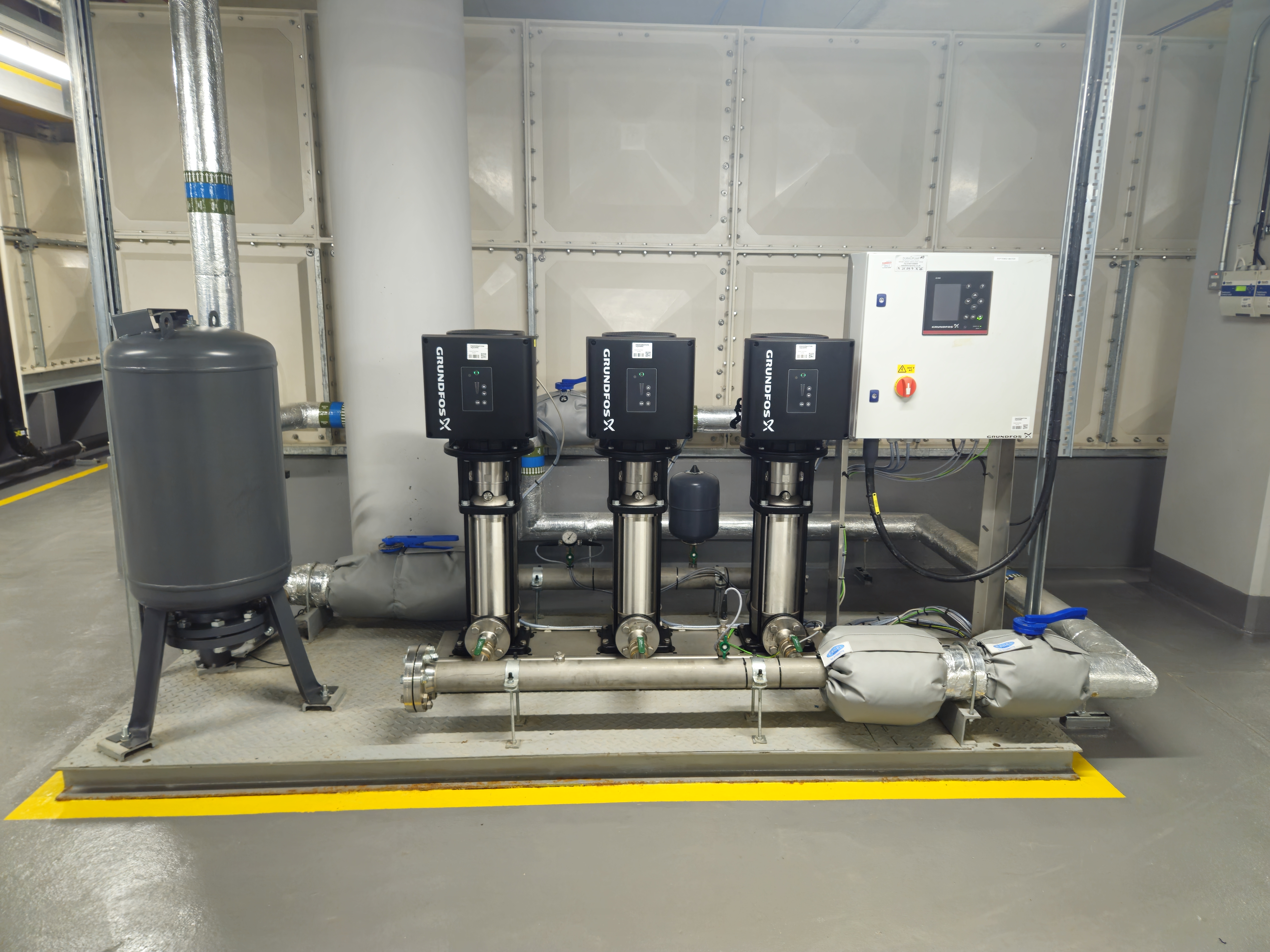
What is a Booster Set?
A booster set is a system designed to increase and maintain water pressure in a building or process system where the incoming mains supply is insufficient. It typically consists of one or more pumps, a control system, pressure sensors and pipework mounted on a frame.
Industrial booster sets are commonly used in:
- Hospitals
- Prisons
- Higher education
- Hotels and leisure facilities
- Commercial buildings
- Industrial facilities.
Their role is simple: ensure consistent water pressure even when demand fluctuates.
The Basic Booster Set
At entry level, booster sets are designed to be simple, reliable, and cost-effective. These systems typically suit small buildings, light commercial installations or properties with moderate water demand.
Typical Features
A basic booster set might include:
- Single pump or twin pump arrangement
- Fixed-speed pump operation
- Basic pressure switch control
- Pressure gauge
- Simple electrical control panel
- Duty/standby configuration (in twin pump systems).
In this configuration, one pump may run while the second acts as backup to maintain reliability.
Advantages
- Lower upfront cost
- Simple installation
- Easy maintenance.
Limitations
- Less energy efficient
- Less control over pressure fluctuations
- Limited monitoring capability.
Rough Cost Guide
For a basic supply only system, expect to pay from £1,500 for a single pump to £5,500 for a twin pump booster set. These are typical entry-level systems often used in light commercial projects.
The Mid-Range Booster Set
A mid-range booster system introduces better efficiency, reliability and smarter control.
Typical Upgrade Features
Features on top of the basic booster set may include:
- Variable speed drives (VFDs)
- Pressure transducers instead of switches
- Duty/assist pump sequencing
- Larger pressure vessels or break tanks
- Energy optimisation controls.
Variable speed systems are particularly popular because they can adjust pump speed to match demand, reducing wear and energy consumption. These systems can reduce energy use by up to 50% compared to fixed-speed systems.
Advantages
- Stable pressure control
- Lower operating costs
- Longer pump lifespan.
Rough Cost Guide
Variable speed twin pumps cost up to £5,500 with a three-pump package up to £17,500. These are common in schools or medium size commercial buildings.
The High-Range Booster Set
At the top end of the market are fully integrated packaged booster systems designed for large buildings, hospitals or complex water networks. These systems often prioritise:
- Energy efficiency
- Reliability
- Monitoring and control
- Redundancy.
Some advanced booster sets can incorporate up to eight pumps with individual variable speed control for maximum efficiency and reliability.
Typical Advanced Features
A fully specified booster set might include:
Smart Pump Control
- Individual variable speed drives on every pump
- Advanced control algorithms
- Automatic duty rotation.
System Redundancy
- Duty/assist/standby configurations
- Multiple pumps to handle peak demand.
Monitoring & Connectivity
- BMS integration
- Remote monitoring
- Fault diagnostics
- Modbus or internet connectivity.
Additional System Components
- Break tanks
- WRAS approved materials
- Pressure vessels
- Flow meters
- Acoustic enclosures
- Energy monitoring.
Advantages
- Maximum energy efficiency
- Extremely stable pressure control
- Reduced downtime risk
- Advanced diagnostics and maintenance alerts.
Rough Cost Guide
Large three to four pump variable speed sets cost up to £20,000. Packaged plant room systems can be £50,000+ and bespoke installations £100,000+. Costs vary significantly depending on:
- Pump size
- Flow and pressure requirements
- Tank sizes
- Materials (stainless steel etc.)
- Control system sophistication.
These are common in large commercial buildings, sprawling higher education campuses, multi-site hospitals and large prisons.
Choosing the Right Level of Booster System
The best booster set is not necessarily the most advanced—it is the one that matches the application.
A simple system may be perfectly adequate for a small property, while a hospital or high-rise building may require a fully integrated multi-pump system with redundancy and remote monitoring.
Choosing the right booster set is dependent on a number of factors, such as:
- Peak water demand
- Building size and height
- Energy efficiency requirements
- Compliance and water regulations
- Maintenance and lifecycle costs.
Booster systems can range from simple, affordable pressure boosters to complex engineered systems with extensive automation and redundancy.
Understanding the difference between these options helps ensure the right balance between performance, reliability and cost.
While a basic system might cost only a few thousand pounds, a fully featured packaged booster set designed for a large commercial building can represent a significant investment—but one that delivers long-term efficiency, reliability and peace of mind.
Dura Pump has experience is recommending basic to high range booster sets and can help you understand and decide which option is best for your building’s needs.
Please email [email protected], if you would like to discuss further.
Delivering Certainty for Critical Buildings
Whatever the challenge, talk to our team about keeping your critical pump systems reliable, efficient and ready when you need them.


