





July 2, 2026
Share this postThe Benefits of a Modular Emergency Pump Solution for Critical Prison Systems
Prisons are complex, high-security environments where essential infrastructure must remain operational at all times. From water supply and wastewater management to heating, cooling, fire protection, and flood response, many critical prison systems depend on reliable pumping equipment. When these systems fail, the consequences can be serious: operational disruption, health and safety risks, security pressures and costly emergency repairs.
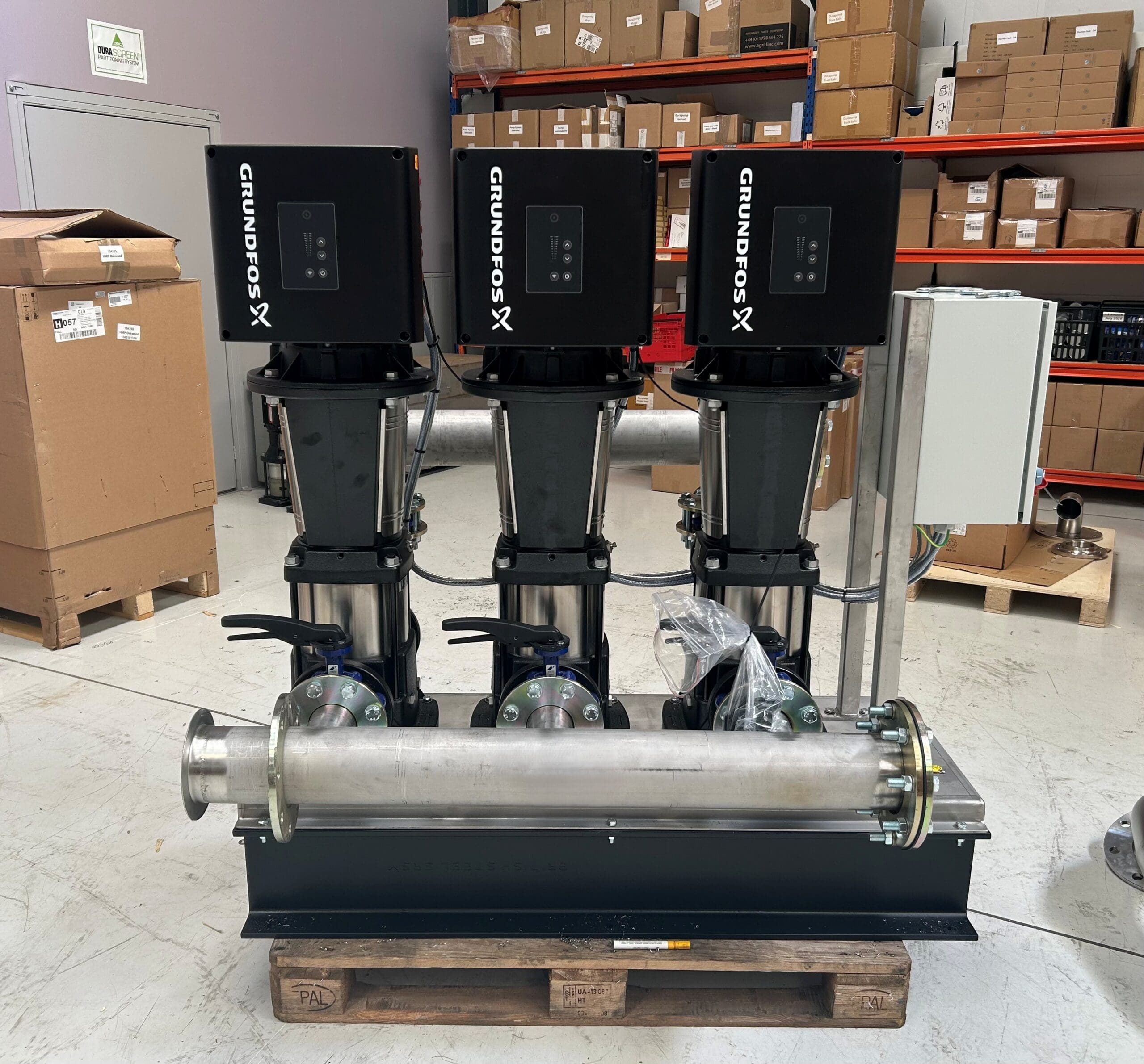
A modular emergency pump solution provides prisons with a flexible, fast-deployable way to protect essential services during planned maintenance, equipment failure, flooding, power disruption, or unexpected system overload. Rather than relying on a fixed, one-size-fits-all approach, modular pump systems can be configured to suit different sites, applications, and risk levels.
Protecting Essential Services
Reliable pumping is central to the safe running of a prison estate. A loss of water pressure, drainage capacity, sewage handling, heating circulation, or fire system support can quickly escalate from an engineering problem into a wider prison issue. A modular emergency pump solution helps maintain continuity across critical systems such as:
- Clean water distribution
- Wastewater and sewage transfer
- Heating and cooling circuits
- Fire suppression support
- Floodwater removal
- Temporary bypass pumping during repairs
- Pump station backup during planned works
By having access to a scalable emergency system, prison operators can respond quickly when core infrastructure is compromised. This helps reduce downtime and supports the continued safe management of the facility.
Fast Deployment in High-Pressure Situations
When a critical pump fails, time matters. Traditional emergency responses can be slowed by site surveys, equipment sourcing, compatibility issues, and access restrictions. In a prison environment, these delays can be even more challenging because contractors, equipment, and vehicles must be managed within strict security procedures.
Modular pump solutions are designed for rapid deployment. Components can be transported, positioned, connected, and commissioned efficiently, allowing engineering teams to stabilise the situation faster. Pre-configured units, standardised connections and flexible layouts can all reduce the time needed to restore essential pumping capacity.
For prisons, this speed is especially valuable. A faster response helps limit disruption to staff routines, inmate welfare, healthcare provision, catering, sanitation, and security operations.
Flexibility Across Different Prison Sites
No two prison sites are exactly the same. Older estates may have ageing pipework, restricted access routes, and legacy plant rooms. Newer facilities may have more modern infrastructure but still require robust contingency planning. Some prisons may need high-flow capacity, while others may require compact systems that can fit into confined service areas.
A modular emergency pump solution can be adapted to these different requirements. Systems can be scaled up or down depending on flow rate, pressure, pumping distance, available space, and the nature of the emergency.
This flexibility allows prison estates to avoid over-engineered or underpowered temporary solutions. Instead, they can deploy the right configuration for the specific problem, whether it involves a small localised failure or a major site-wide incident.
Supporting Security and Operational Control
In prisons, infrastructure failure is not only a maintenance issue. It can affect regime delivery, staff workload, prisoner movement, and overall site stability. For example, a drainage failure may restrict access to parts of the estate. A heating or water issue may create welfare concerns. Flooding can compromise safe movement, electrical systems, or secure areas.
Modular pump systems help prison teams maintain greater control during emergencies. By restoring or supporting essential services quickly, they reduce the chance of an infrastructure problem becoming an operational or security issue.
A well-planned pump solution can also be installed with security needs in mind. Equipment can be placed in controlled areas, configured to minimise disruption, and managed alongside site access procedures. This is particularly important when external contractors are required to work within secure environments.
Reducing Downtime During Planned Maintenance
Emergency pumps are not only useful when something goes wrong. They can also support planned maintenance, refurbishment, inspections, and upgrades.
Temporary modular pumping can allow critical systems to remain operational while permanent assets are isolated, repaired or replaced. This is especially beneficial in prisons, where shutting down essential infrastructure may be difficult or unacceptable.
By using a modular bypass or backup pump arrangement, maintenance teams can carry out necessary works while reducing disruption to the wider prison. This supports better asset management and helps prevent minor defects from developing into major failures.
Cost-Effective Risk Management
A major infrastructure failure can be expensive. Costs may include emergency call-outs, damage repairs, temporary accommodation measures, disruption to prison operations, regulatory scrutiny, and reputational impact.
A modular emergency pump solution offers a practical way to manage these risks. Because the system can be adapted to different applications, it can serve multiple contingency purposes across an estate. This reduces the need for separate fixed backup arrangements for every possible scenario.
Delivering Certainty for Critical Buildings
Whatever the challenge, talk to our team about keeping your critical pump systems reliable, efficient and ready when you need them.


