





August 18, 2022
Share this postWhat Type Of Booster Set Break Tanks Are Available?
At Dura Pump, we’re often approached by customers with one frequently asked question: what type of booster set break tanks are available? To answer this question, we will break down the various kinds of booster set break tanks and what they are used for.
Before we explain the various types and styles of booster set break tanks, let’s take a look at what they actually do. Put simply, a break tank on a booster is situated between the incoming mains water and the booster pump set. It provides a buffer of water for the booster set to keep up with demand and stops the booster set from sucking the mains water dry.
Below, we highlight the various styles, as well as the various materials available.
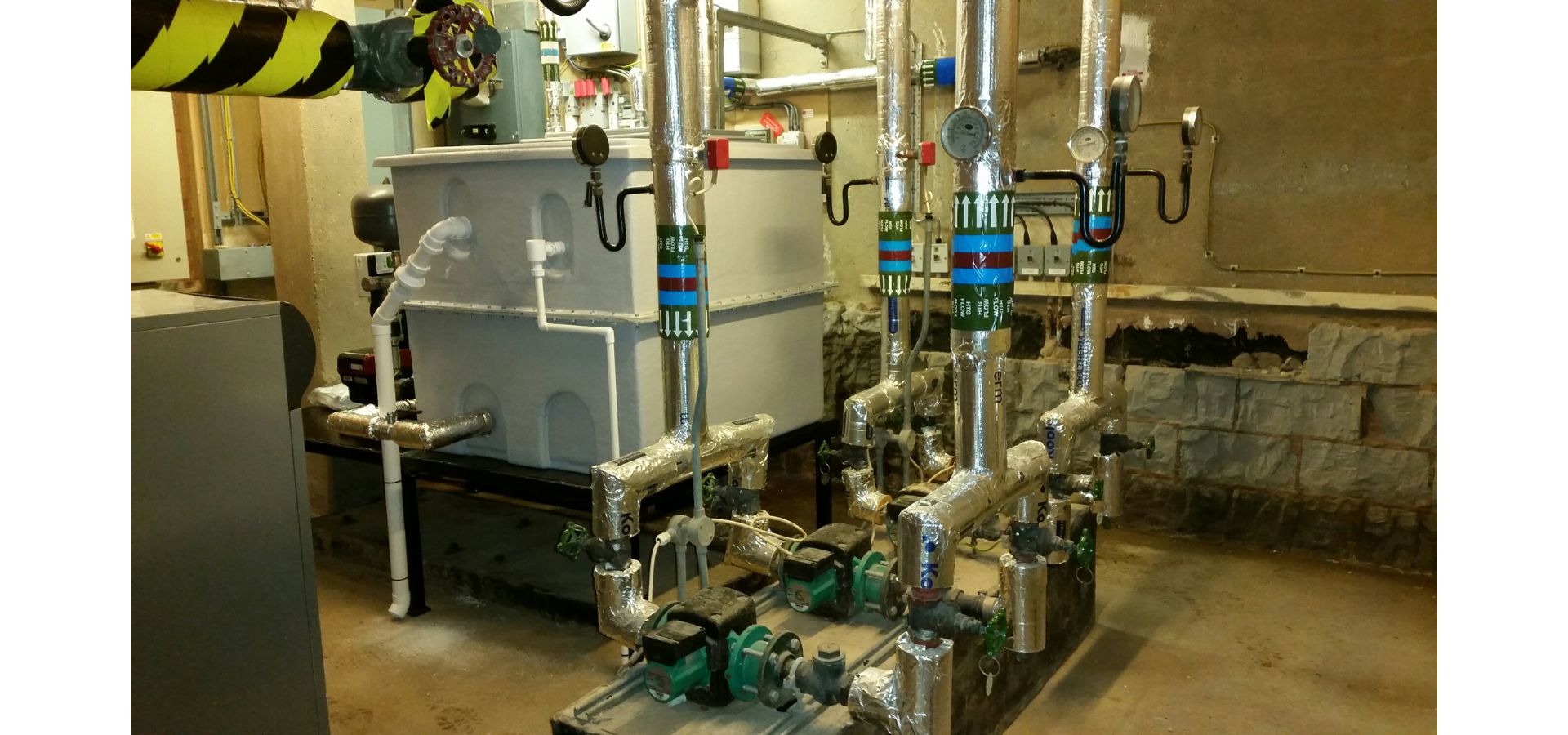

GRP Sectional Tanks
GRP sectional tanks are typically used as water storage tanks for large quantities of water, in or outside a building. The advantage of these tanks is that they are made from 1m square GRP sections, which allows them to be easily transported in areas of limited access and then assembled into a large tank.
This functionality means that sectional tanks can be used, which are very convenient in almost any size booster set application as the tanks can hold thousands or hundreds of thousands of litres.
GRP Two Piece Tanks
A GRP two-piece tank has a flange in the middle of the tank allowing it to be split in half so it can be moved through a single door and then assembled relatively simply in the required location. These tanks are ideal for smaller applications where space is limited. These tanks typically hold up to 7,500 litres.

GRP One Piece Tanks
A GRP one-piece tank is simply a moulded tank, which makes it cost-effective, but larger units can create access problems. They are ideal for usage outside and small and medium applications where access is not a concern. This type of tank is available up to 12,000 litres.

Stainless Steel Tanks
Stainless steel tanks are bespoke fabricated units and are typically made to suit a specialist application. They come in a wide range of sizes and can also be fabricated with a skid unit to install the booster set on.
Their main applications are in industrial processes and food manufacturing plants. Although these are highly durable tanks, due to their design and material they do cost a lot more than a standard GRP or plastic tank.

Plastic Tanks
Plastic tanks are pre-moulded one-piece tanks, often used externally. Being a one-piece moulded tank, they are highly durable and cost-effective. Obviously, access does need to be carefully considered when choosing this type of tank. They are normally used in industrial and agricultural applications, with a single tank holding up to 30,000 litres.
Should your application require more storage or volume than just one of the above tanks, it is possible to connect multiple tanks, but consideration has to be given to the flow of the water to ensure there is no stagnation which could lead to a Legionella issue.
Call on Dura Pump: Your Trusted Pump Specialist
Still undecided as to what kind of booster set break tank you need? Don’t worry. Our team of pump experts is on hand to provide the advice you need, when you need it. Contact a Dura Pump specialist today.
Stainless steel tanks are typically chosen for their strength, hygiene and durability. They are ideal for demanding environments or where water quality is critical.
Key reasons:
- Hygienic: Smooth, non-porous surface reduces bacterial growth (important for potable water)
- Durable: Highly resistant to corrosion, impact, and long-term wear
- Temperature resistant: Handles higher temperatures without deforming
- Compact & rigid: Can be installed in tighter plant rooms without risk of bulging
- Long lifespan: Often lasts longer with minimal degradation.
A stainless steel option is usually better for:
- Hospitals, food production, or potable water systems
- Indoor plant rooms with limited space
- Sites requiring high durability and long service life
- Where strict hygiene standards must be met.
Plastic tanks are usually selected for their lower cost, lighter weight and ease of installation and are a better option for:
- Budget-sensitive projects
- Sites with difficult access (e.g. rooftops, basements)
- Non-critical water applications
- Outdoor installations where weight is a concern.
Want to stay up-to-date with the latest news?
Subscribe to our mailing list to hear the latest news, events, free resources, and more for your industry.
Delivering Certainty for Critical Buildings
Whatever the challenge, talk to our team about keeping your critical pump systems reliable, efficient and ready when you need them.


