


February 3, 2025
Share this postThe Benefits of Pressurisation Sets vs Traditional ‘Open’ Systems
What is a pressurisation set and why is it necessary?
A pressurisation set is a unit designed to pressurise a pump system, most commonly heating pumps or hot and cold water services. It fills the unit to the best pressure to allow the correct flow. To do this it uses one or two small peripheral pumps throughout the system to maintain pressure.
The warm/chilled water pressurisation unit is controlled with switches that detect system pressure and engage the pumps when pressure is lost. A pressurisation set is linked to a closed system at a neutral point. This point is not impacted by the duty of a system pump.
Why is a Pressurisation Set Necessary?
Without a pressurisation set, systems would experience significant pressure fluctuations. When water heats up, it expands, increasing pressure. If this pressure isn’t controlled, it can lead to safety valve discharge and potential damage to components. A pressurisation unit for chilled water systems is just as necessary. When water cools, it contracts, leading to a drop in pressure. If the pressure drops too low, it can cause air ingress, pump cavitation, and system malfunction.
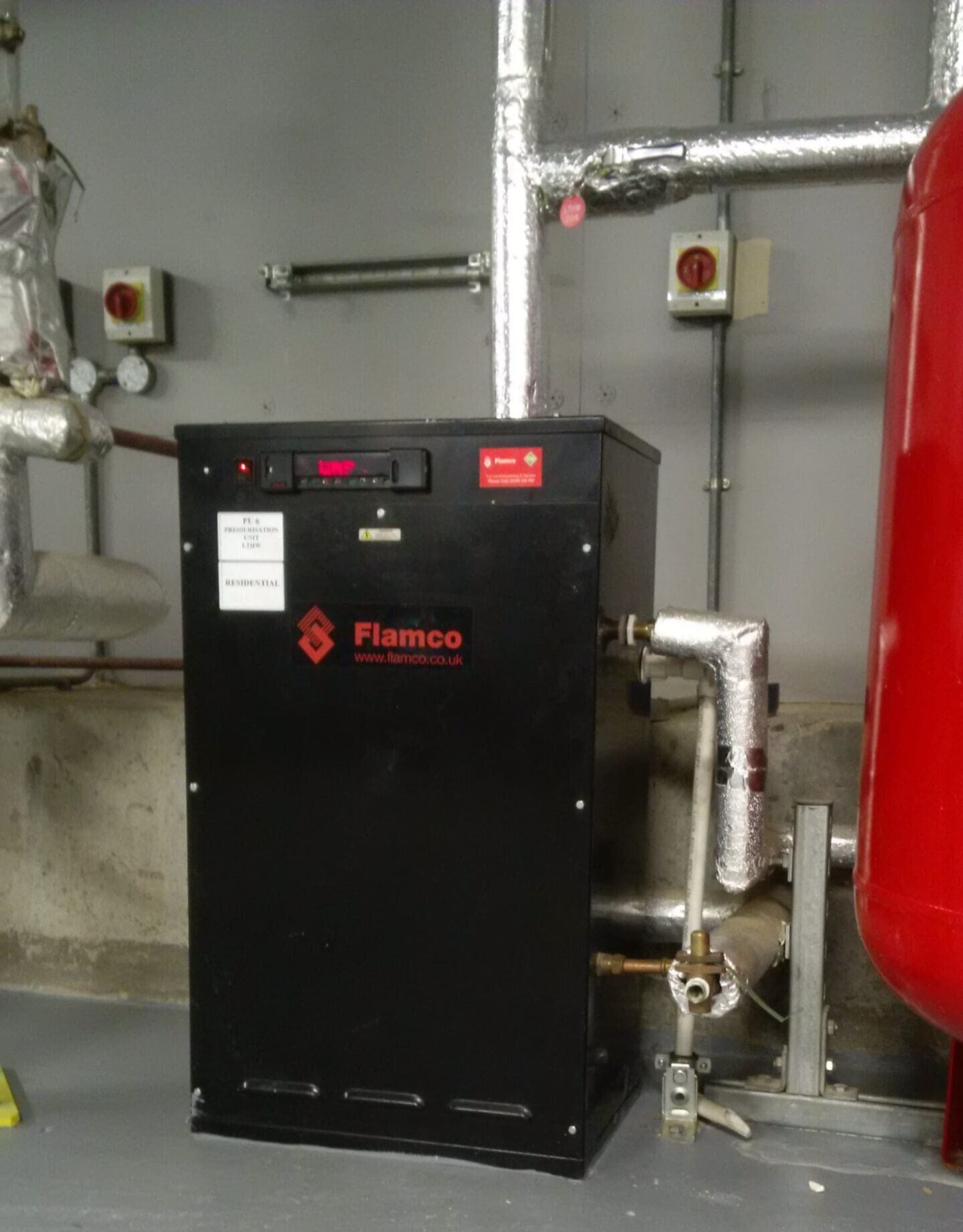
Traditional ‘open’ systems vs pressurisation units
At Dura Pump we, unfortunately, encounter businesses that have had a pump unit incorrectly specified to them. Whilst these units are not always necessarily wrong or bound for failure, there are many units and systems that are not maximising a premises capability, leading them to encounter unnecessary costs whilst being unable to achieve the best performance.
One example of this is the traditional ‘open’ heating/chiller system.
The traditional ‘open’ heating/chiller system is manufactured with its feed and expansion tank above the highest point in the system. It feeds it with water whilst accommodating expansion and replacing evaporated losses. However, water stored at this height occupies a large amount of space because this high level of storage needs improved structural support.
As traditional systems are ‘open’, air is allowed to enter the system which can lead to corrosion and unavoidable maintenance costs and issues. This ‘flaw’ in the design cannot be fixed on these models without causing issues of its own and either ‘solution’ will lead to damaging downtime and frustrating expenditures.
On the other hand, pressurisation sets resolve these issues whilst keeping all the benefits that a traditional system has. Pressurisation sets are first enclosed so that air can not contaminate the unit and cause oxidisation. Secondly, pressurisation sets are designed to be compact and correct placement ensures there’s no risk of storing water in heavy structures at high levels.
Different Types of Pressurisation Sets
There are many types, each suited to different system sizes and requirements:
- Fixed Volume/Diaphragm Expansion Vessels (Passive): These are common in smaller domestic systems. They rely on a pre-charged air cushion to absorb expansion. The vessel itself doesn’t actively “do” anything other than contain the expanding water.
- Closed Expansion Vessels with Fill & Purge Pumps (Active/Pumped): The pressurisation unit and expansion vessel systems are more sophisticated. They use a pump to maintain pressure by adding water from the mains when needed and can also facilitate automatic air removal.
- Variable Volume/Bladder Expansion Vessels: Similar to diaphragm vessels but often used in larger commercial systems, offering more robust construction and easier bladder replacement.
- Pressurisation Units with Degassing Functionality: Some advanced units actively remove dissolved gases from the system water, which helps prevent corrosion and improves efficiency.
- Bespoke/Modular Systems: For very large or complex industrial applications, pressurisation can be integrated into a custom-designed plant room solution.
Your respective heating or cooling system will benefit from the inclusion of a pressurisation set as opposed to a traditional unit because they are more compact, more adequately sealed and ultimately resolve issues created in traditional open systems. Why would you keep exposing your pump to potential failures and yourself to future maintenance costs when you could switch to a pressurisation set for peace of mind?
A pressurisation unit is a self-contained system designed to maintain the correct pressure in closed-loop water systems (such as heating and chilled water). It uses one or more small peripheral pumps and pressure sensors to detect drops in pressure and replenish system fluid accordingly.
In a chilled water pressurisation unit scenario, the unit ensures constant system pressure, compensating for fluid losses and air ingress in the loop. This helps the chilled water system run efficiently, reducing risks of low-flow conditions or temperature instability.
The pressurisation unit in a chilled water system detects pressure drops via switches, activates its peripheral pump(s) to top up the system, and keeps the entire system at optimum operating pressure. Because it’s a closed system, it prevents air ingress and avoids issues related to traditional open-feed systems.
A properly specified pressurisation unit for chilled water systems improves compactness (no high-level tanks), limits air ingress and corrosion, enhances system performance and reliability, and aids overall energy efficiency—particularly important in large applications.
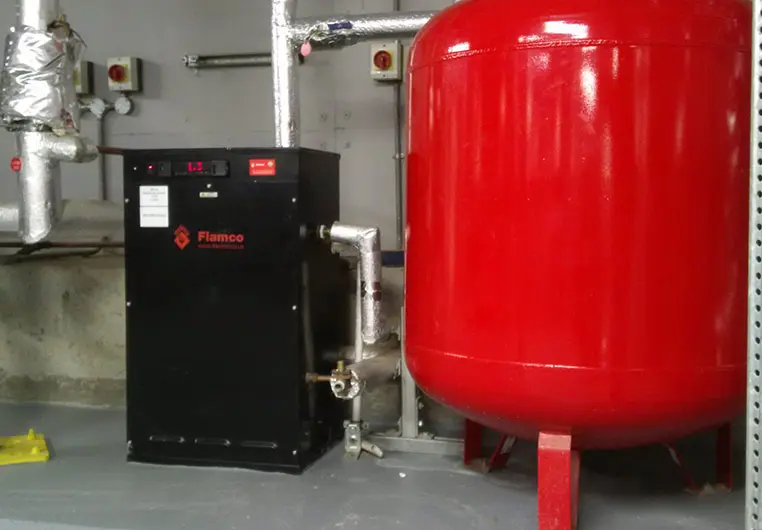
In many systems, a pressurisation unit is paired with an expansion vessel to absorb volume changes due to temperature variations. The pressurisation unit keeps system pressure stable, while the expansion vessel accommodates changes in fluid volume, reducing stress on the system and maintaining safe, effective operation.
You’ll typically find a pressurisation unit in closed-loop heating or chilled water systems, especially where open feed systems are unsuitable. They’re ideal in large commercial or institutional buildings (e.g., hospitals, office blocks) where maintaining consistent pressure and avoiding air ingress is essential.
Gallery

Want to stay up-to-date with the latest news?
Subscribe to our mailing list to hear the latest news, events, free resources, and more for your industry.
Choosing Dura Pump means investing in reliability and safety for your facility. Talk to an expert about your needs