





March 22, 2023
Share this postWhat Is A Fill And Spill System?
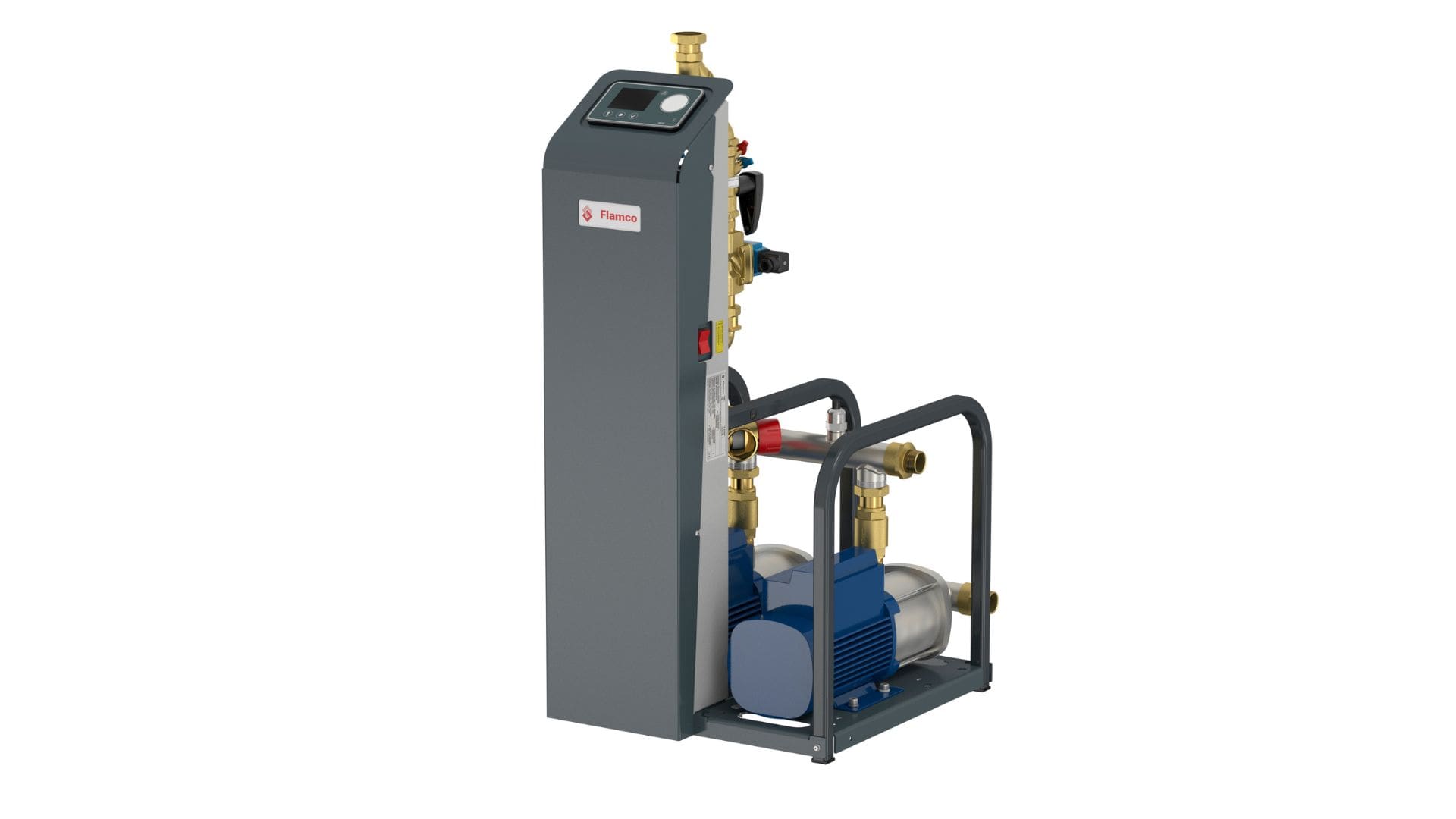
A fill and spill system does the same job as a pressurisation unit but is typically found on larger systems or in older buildings.
It is designed to maintain pressure within a heating system and usually consists of a large tank or vessel, pumps, spill valve and a control system.
How Does It Work?
The fill and spill system works by monitoring the pressure in the system, using a pressure switch or a pressure transducer.
If the pressure in the system is too low the pumps are automatically turned on to draw water from the tanks and add it to the system, thereby increasing the pressure. The pumps are turned off automatically when the desired pressure is reached.
If the pressure is too high, the spill valve – which can either be a mechanically operated valve or an electric solenoid valve – opens, allowing water to pass into the tank, thereby reducing pressure within the system.
The expansion happens when the system is heating up which causes the water to expand. Then as the system cools down, the water condenses, dropping the system pressure.
Other Features Of A Fill and Spill System
A fill and spill system also has safety interlocks with the boiler so if the system’s pressure is too high or too low it will send a signal to the boiler, cutting it off.
However, while this is a good safety feature, if the boiler is cut off, it will cause loss of heating and hot water to your building.
The risk of losing heating and hot water to a premises means that maintaining a fill and spill system correctly is critical. Fill and spill systems should be serviced regularly, typically every 6-12 months.
These days, fill and spill systems are less widely used and many of them are now becoming obsolete because standard pressurisation sets and large pressure vessels can be used in their place.
More widespread use of standard pressurisation sets also means standard components can be used, so a pressurisation set is often a more cost effective solution than a fill and spill system for many people. However, some fill and spill systems are manufactured by companies such as Flamco, and available through Dura Pump.
Dura Pump can also create custom built fill and spill systems. Please contact us for further information.
A fill and spill system is a fluid-management setup that automatically fills a tank, reservoir, or vessel to a preset level and then allows excess liquid to “spill” into an overflow or return line. This ensures consistent liquid levels without requiring complex controls.
They’re used in:
- Industrial cooling water loops
- Chemical baths and rinse tanks
- Process reservoirs
- HVAC or chilled-water top-off systems
- Open-tank supply systems
These applications benefit from stable water levels and simplified control.
The system fills the tank via a controlled inlet. When the fluid reaches the designated level, excess liquid exits through an overflow (the “spill”) line, preventing overfilling.
Common components include:
- Inlet fill valve
- Level sensor or float valve
- Spill/overflow piping
- Optional pumps
- Strainers or filters
- Check valves
A spill valve is a valve designed to release excess fluid from a tank or system once the desired fluid level or pressure is reached. In fill and spill systems, it ensures overflow is directed safely into the spill line or return loop, preventing overfilling, flooding, or system damage.
A spill valve is an active control mechanism—it opens or regulates flow based on pressure or level conditions.
An overflow pipe is a passive safety feature—it simply allows fluid to exit when the tank physically reaches the overflow height.
Common causes include:
- A stuck or faulty fill valve
- Blocked spill/overflow piping
- Incorrect tank level settings
- Excessive incoming flow rate
- Debris in level sensors or floats
Likely causes:
- Blocked or constricted piping
- Incorrect slope on the drain line
- Airlocks
- Contamination buildup
- Undersized spill piping for the flow rate
Use strainers or filters on the fill line, ensure spill pipes remain clean, and include backflow prevention if the fluid is part of a critical process.
Routine inspection is recommended:
- Monthly for industrial systems
- Every 3–6 months for moderate-use facilities
- Any time flow fluctuations or unexpected overflow occurs
- Check valves, floats, spill lines, and filters should be included in maintenance checks.
Yes, but the materials (valves, seals, piping, sensors) must be compatible with the fluid. Corrosive or viscous fluids may require upgraded components.
Want to stay up-to-date with the latest news?
Subscribe to our mailing list to hear the latest news, events, free resources, and more for your industry.
Gallery

Delivering Certainty for Critical Buildings
Whatever the challenge, talk to our team about keeping your critical pump systems reliable, efficient and ready when you need them.


